
November 29, 2024
From science alone to patient impact
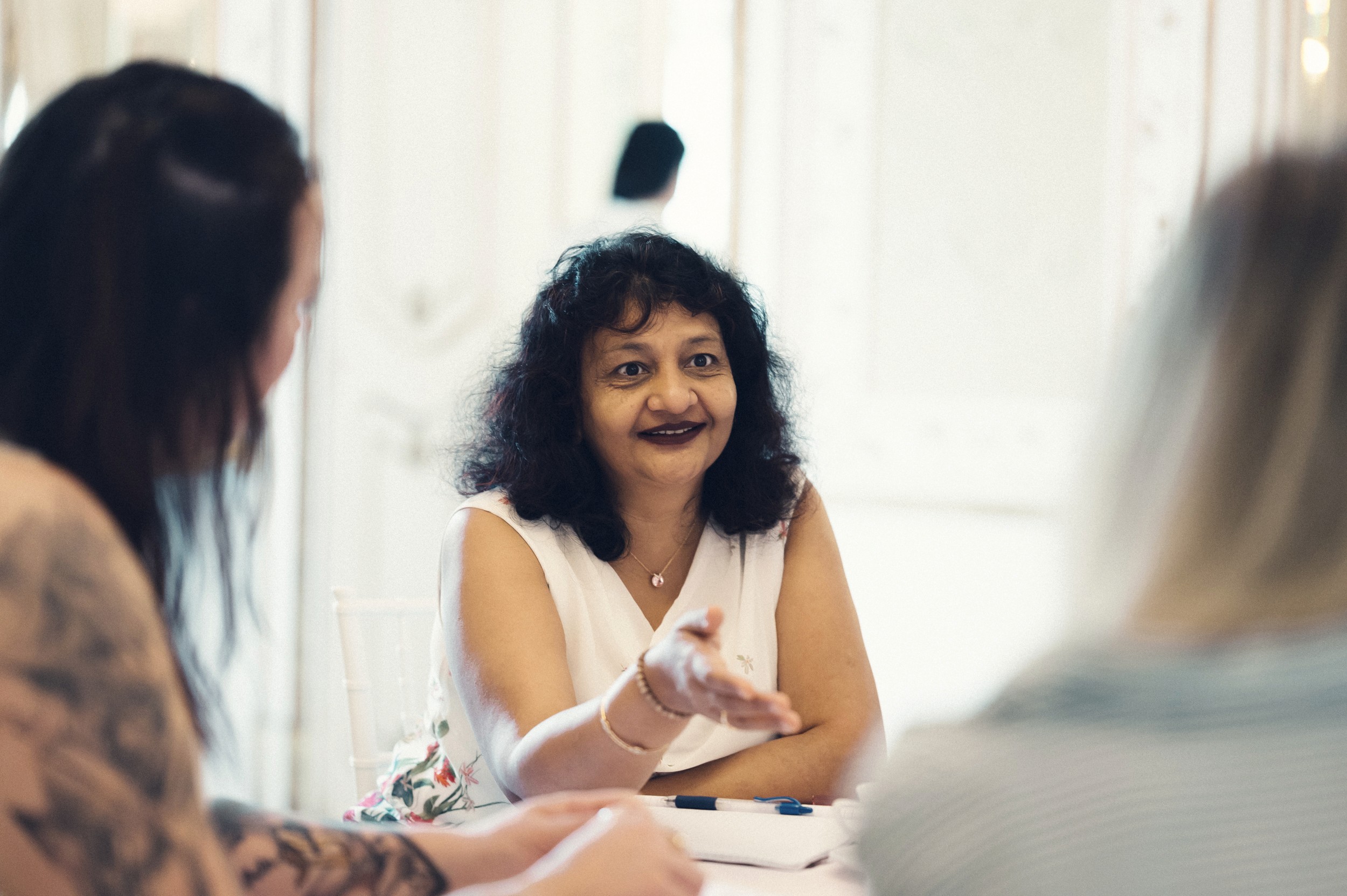
“Science has the greatest impact when it is guided by patients’ needs.”
Babita Madan. Associate Professor, Program in Cancer and Stem Cell Biology, Duke-NUS Medical School, Singapore
Intro
For years, Babita Madan’s work in translational medicine focused on advancing drug development, moving ideas from discovery into early clinical trials. But something fundamental was missing. Eureka became the moment where that perspective shifted.
From discovery to meaning
Before Eureka, Babita’s work followed a familiar path: identify targets, validate them, and progress toward clinical application. But the programme challenged her to step back and ask a deeper question: Who are we really solving for?
Through the Eureka Course in Translational Medicine, she began to see translation not as a linear process, but as a human-centred system — one that must begin with patients, not end with them.
The turning point
Meeting families advocating for rare disease research became a defining moment.
“It reminded me that behind every project are real people.”
What was once abstract became deeply personal. Research was no longer just about outcomes — it was about lives, urgency, and responsibility.
A shift in leadership
This shift extended beyond her scientific work. Babita began to lead differently:
More inclusive in decision-making
More attentive to diverse perspectives
More aware of the human context behind every project
She evolved from a discovery scientist into a translational leader.
Impact in practice
Today, her work sits firmly at the intersection of academia, healthcare, and industry with a renewed focus:
Not just to develop therapies,
but to ensure they truly improve lives.