January 13, 2026
Where Science Meets Humanity
“Science alone is not enough.”
For decades, progress in medicine has been driven by breakthroughs in laboratories, advances in technology, and the relentless pursuit of discovery. But somewhere along the way, a critical gap has persisted: between what we discover and what actually reaches people.
At Eureka Institute, that gap is not just acknowledged. It becomes the starting point.
The gap becomes visible
Lin Lao
“Research findings in labs are often hard to translate into clinical practice.”
For Lin Lao, the disconnect was impossible to ignore. Working between hospital environments and scientific research, she saw firsthand how promising discoveries often struggled to move beyond controlled settings into real-world application. The issue was not a lack of innovation. It was a lack of connection:
between researchers and clinicians
between systems and realities
between intention and implementation
Eureka did not simply highlight this gap. It reframed her role within it. From observing the divide → to actively wanting to bridge it.
The translational lens expands
Dr Chao Yinxia
“The course provided a valuable framework for understanding how scientific discovery, clinical need, and real-world implementation intersect.”
For Dr Chao Yinxia, the shift was structural.
Her work already operated within translational medicine, but Eureka expanded the lens through which she understood it. Translation became a system that connects:
scientific discovery
clinical realities
regulatory pathways
implementation challenges
and ultimately, patient outcomes
What emerged was a more integrated way of thinking — one that recognises that impact is created across an entire ecosystem.
From publication to people
Jessie Leuk Siew-Pin
“I no longer see research ending at publication.”
For many researchers, publication marks completion. At Eureka, it becomes a transition point. Jessie Leuk Siew-Pin describes a fundamental shift in how she views her work from producing knowledge to ensuring that knowledge travels.
Into systems.
Into decisions.
Into real-world use.
She began to see research as part of a broader journey — one shaped by context, stakeholders, constraints, and human needs. The question is no longer: What did we discover? But: What difference does it make?
Beyond academia into practical change
Francisco Loyola
“A community that uses science as a practical vehicle for change and is genuinely committed to serving humanity.”
For Francisco Loyola, the impact of Eureka extended beyond academic thinking. It reshaped how science can operate in the real world. Within the programme, science is not treated as an abstract pursuit but as a tool.
A tool for:
solving real problems
creating tangible change
and serving people
This perspective moves translational medicine out of silos and into action. It is about understanding complexity as well as about navigating it, collaboratively.
The community that makes it possible
Cyrus Ho Su Hui & Toh Han Chong
“A supportive and safe space where people from different fields, with shared goals, come together.”
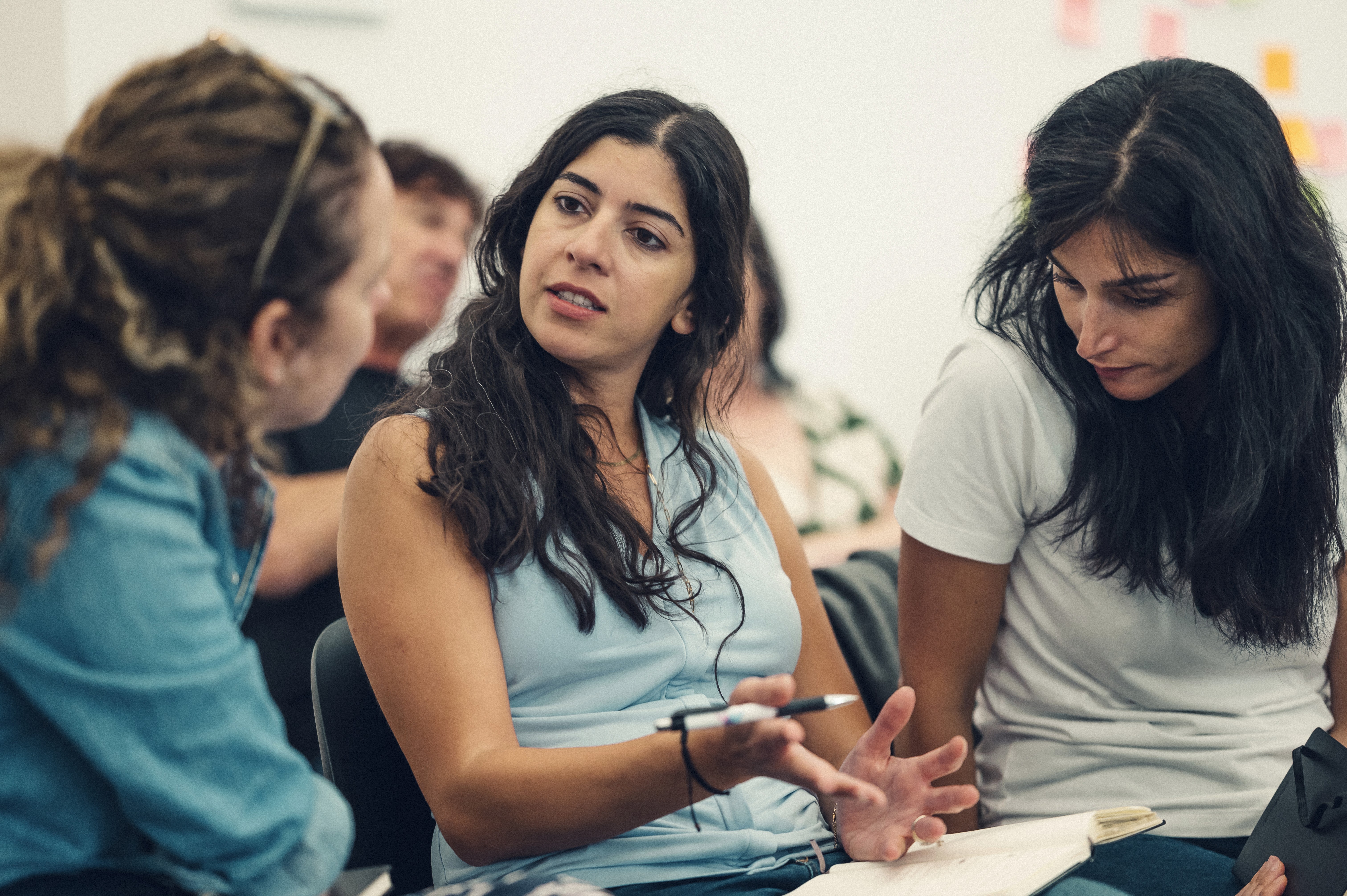
At the heart of Eureka is a space where clinicians, researchers, innovators, and leaders come together not despite their differences, but because of them. Cyrus Ho Su Hui describes this as a rare environment — one that allows for openness, exchange, and genuine collaboration across disciplines. And beyond the programme itself, that connection continues.
“Eureka is about building a global village in translational medicine.”
For Toh Han Chong, this global network becomes a long-term force, enabling mentorship, collaboration, and shared purpose across borders.
Closing
Translational medicine is often described as the bridge between science and application. At Eureka, it becomes something more. A bridge between:
knowledge and reality
expertise and empathy
systems and individuals
Because when science is connected to people to their needs, their experiences, their lives, it becomes more human. And in that shift, it becomes truly impactful.